
Heavy Duty Bucket vs Rock Bucket: What's the Difference?
- Jun 3
- 2 min read
When comparing a Heavy Duty Bucket vs Rock Bucket, understanding the key differences is essential for maximizing productivity and reducing operating costs. Although both bucket types are designed for demanding excavation work, they serve different purposes depending on material conditions, wear levels, and project requirements. This Heavy Duty Bucket vs Rock Bucket guide explains their applications, advantages, and how to choose the right excavator bucket for your operation.



What Is a Heavy Duty Bucket?
A Heavy Duty Bucket is designed for general earthmoving and construction applications involving moderately abrasive materials.
Typical applications include:
Construction projects
Road building
Site preparation
Utility trenching
General excavation
Heavy Duty Buckets are reinforced compared to standard buckets and provide a balance between durability and productivity.
Advantages of Heavy Duty Buckets
Lower operating weight
Improved fuel efficiency
Faster cycle times
Versatile performance
Reduced machine stress
These buckets are ideal for contractors who work with soil, clay, gravel, and mixed materials on a daily basis.
What Is a Rock Bucket?
A Rock Bucket is specifically engineered for highly abrasive and demanding environments.
Typical applications include:
Quarry operations
Mining projects
Blasted rock handling
Granite excavation
Basalt and hard stone applications
Rock Buckets feature significantly more reinforcement and wear protection than Heavy Duty Buckets.
Advantages of Rock Buckets
Superior wear resistance
Extended service life
Better impact resistance
Reduced downtime
Lower long-term replacement costs
Rock Buckets are designed to withstand extreme conditions where standard or heavy-duty buckets would wear out quickly.


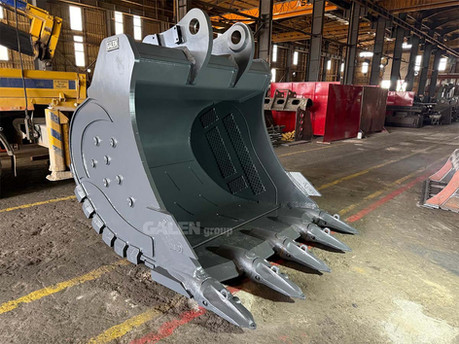
Key Differences Between Heavy Duty vs Rock Buckets
Feature | ||
Material Type | Soil, clay, gravel | Rock, granite, quarry materials |
Wear Protection | Medium | Maximum |
Bucket Weight | Lower | Higher |
Impact Resistance | High | Very High |
Operating Cost | Lower | Higher Initial Investment |
Service Life in Abrasive Conditions | Moderate | Excellent |
Which Bucket Should You Choose?
The choice depends entirely on your working environment.
Choose a Heavy Duty Bucket if:
You work mainly in construction.
Materials are moderately abrasive.
Productivity and fuel efficiency are priorities.
You need a versatile bucket for multiple projects.
Choose a Rock Bucket if:
You operate in quarries.
You handle blasted rock.
Wear resistance is critical.
Maximum durability is required.
Why Wear Protection Matters
One of the biggest differences between Heavy Duty and Rock Buckets is the level of wear protection.
Modern Rock Buckets often include:
Wear strips
Side protectors
Heel shrouds
Reinforced cutting edges
Additional wear plates
These features significantly extend bucket life in highly abrasive environments.
Custom Bucket Solutions
Many contractors face unique operating conditions that require more than a standard bucket design.
Custom-engineered bucket solutions can provide:
Improved productivity
Better material penetration
Reduced fuel consumption
Extended wear life
Lower maintenance costs
Choosing a bucket specifically designed for your application often delivers the highest return on investment.
Final Thoughts
Heavy Duty Buckets and Rock Buckets serve different purposes. While Heavy Duty Buckets provide excellent versatility for general construction work, Rock Buckets are built to survive the toughest quarry and mining conditions.
Understanding the material type, operating environment, and wear requirements of your project will help you select the most cost-effective solution for long-term performance.
For expert guidance on Heavy Duty, Rock, and custom excavator bucket solutions, contact Galen Group to find the ideal attachment for your operation.


